


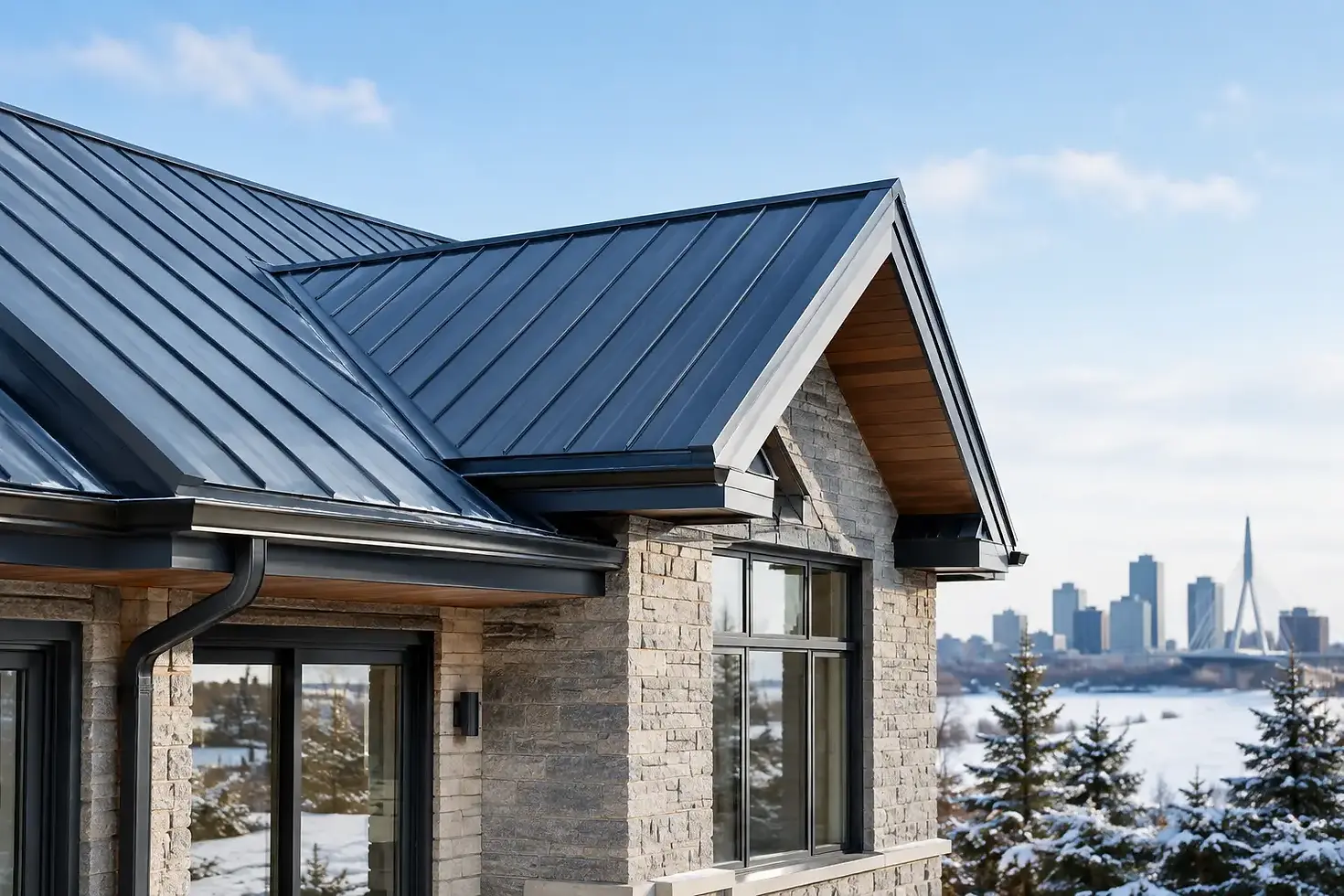
Metal Roofing Durability Review for Winnipeg Homes
A metal roofing durability review has to start with the conditions the roof will face. In Winnipeg and across Manitoba, a roof must handle heavy snow, freeze-thaw cycles, hail, wind, summer heat and sudden temperature changes. Metal roofing can perform exceptionally well in this climate, but its lifespan depends on the material, profile, installation quality and the condition of the roof system beneath it.
For homeowners replacing an ageing shingle roof, metal is often considered for one reason: the prospect of a roof that lasts decades rather than requiring replacement after one or two shorter roofing cycles. That benefit is real, but it is not automatic. A well-installed metal roof is a long-term exterior investment, not simply a sheet of metal fastened over a house.
How Durable Is Metal Roofing in Manitoba?
A properly specified and installed residential metal roof can commonly last 40 to 70 years, with some systems lasting longer when maintained well. By comparison, asphalt shingles generally offer a shorter service life, particularly when exposed to repeated wind, ice and temperature stress.
Metal does not absorb water, rot or become brittle in the same way as many conventional roofing materials. It is also resistant to insect damage and can shed snow more readily than a textured shingle roof. Those qualities make it a strong option for homes, cottages and rural properties where long-term weather protection matters.
Durability does not mean a metal roof is indestructible. Large hail can dent certain profiles, falling branches can damage panels, and poor fastening can lead to movement or leaks. The difference is that a quality metal system is designed to manage harsh weather without rapidly losing its protective function.
The metal itself matters
Steel is the most common choice for residential metal roofing in this region. Galvanised or coated steel panels offer dependable strength at a price many homeowners can justify over a long ownership period. Thicker-gauge steel generally resists denting better, although it also increases material cost.
Aluminium is naturally corrosion resistant and can be useful in particular environments, but it is softer than steel and may be more susceptible to dents. The best choice depends on the roof design, the property location and the level of impact resistance required. A contractor should explain the material options clearly rather than treating every metal roof as the same product.
Metal Roofing Durability Review: What Affects Lifespan?
The panel is only one part of the roof. Most premature failures begin at details that are easy to overlook: flashing around chimneys and vents, valleys, roof transitions, fasteners, underlayment and ventilation. If these components are poorly installed, even premium metal panels cannot protect the home as intended.
Installation also affects how the roof responds to expansion and contraction. Metal naturally moves as temperatures rise and fall. A system must allow for that movement while keeping every seam, screw and edge secure. Panels installed too tightly, fasteners driven incorrectly or mismatched trims can create problems that may not appear until several seasons have passed.
The roof deck must be sound before installation begins. Covering soft, wet or damaged sheathing does not solve a roofing problem. It hides it. Any damaged deck sections should be repaired, and the installer should ensure the correct underlayment and ice-and-water protection are used in vulnerable areas.
Ventilation is equally important. A poorly ventilated attic can trap heat and moisture, contributing to condensation, ice dams and unnecessary stress on the roofing assembly. The visible roof is important, but durable performance comes from the complete system working together.
How Metal Handles Winnipeg Weather
Snow and ice
Metal’s smooth surface helps snow slide away, reducing the long-term weight sitting on the roof. That can be useful after a heavy Manitoba snowfall. However, fast snow release also needs to be managed. Snow guards may be recommended above entrances, walkways, decks or areas where falling snow could damage landscaping or create a safety risk.
Ice dams are not caused by the roof covering alone. They usually result from heat escaping into the attic and melting snow unevenly. Metal roofing can be part of a reliable winter roof system, but insulation, ventilation and proper edge protection still matter.
Wind and driving rain
A metal roof with correctly installed fasteners and flashing can provide excellent wind resistance. Panel profile, fastening pattern and the condition of the roof deck all affect performance. This is one area where workmanship is not a detail - it is the difference between a system that stays secure and one that develops lifted edges or water entry points after a storm.
Driving rain tests valleys, sidewalls, skylights and penetrations. A dependable installer uses properly formed flashing and compatible sealants rather than relying on excessive caulking as a shortcut. Sealant has a place, but it should support the roofing details, not replace them.
Hail and impact
Metal roofs are often chosen for storm resistance, but homeowners should be realistic about hail. A severe hailstorm can leave cosmetic dents on exposed metal panels, particularly with lighter-gauge products. Whether that counts as damage depends on the roof system, the extent of the impact and the homeowner’s expectations.
Many metal roofs remain watertight and structurally sound after hail that would remove granules or crack shingles. If appearance is a major concern, ask about panel gauge, profile and available impact ratings before choosing a product.
Maintenance Is Low, Not Zero
One of the strongest benefits of metal is reduced maintenance. It does not require regular shingle replacement, and it is less likely to collect moss or lose surface granules. Still, every roof benefits from a seasonal visual check, especially after a major storm.
Keep eavestroughs and downpipes clear so water can leave the roof line properly. Remove branches and debris that hold moisture against the panels or obstruct drainage. Check for loose flashing, damaged sealant around penetrations, scratches in the finish and fasteners that appear backed out. Small issues are simpler and less costly to correct before they allow water below the roofing surface.
Avoid walking on a metal roof unless necessary. Foot traffic can damage panels or create unsafe conditions, particularly when the roof is wet or icy. A professional inspection is the safer choice when there is a suspected issue.
The Trade-Offs Homeowners Should Consider
Metal roofing costs more upfront than a standard asphalt shingle replacement. The installed price varies with roof size, pitch, access, panel style, tear-off requirements and the amount of flashing work required. Complex roofs with multiple valleys, dormers and skylights require more labour and material than simple gable roofs.
Noise is another common concern. When installed over a proper roof deck with underlayment and attic insulation, a metal roof is not typically dramatically louder indoors during rain than other roofing materials. The experience can be different on an uninsulated detached garage, porch or cottage structure.
Colour and finish should also be selected carefully. Quality coatings are made to resist fading and weathering, but no exterior finish remains unchanged forever. Choose a colour that suits the home and consider how it will work with siding, soffit, fascia and eavestroughs over the years ahead.
When Metal Roofing Is Worth the Investment
Metal roofing makes the most sense for homeowners planning to stay in their property for many years, or for those who want to reduce the likelihood of another full roof replacement within their ownership period. It is also a practical choice for cottages and homes exposed to open wind, heavy snow or frequent storm activity.
It may not be the best fit for every budget or every roof. A good asphalt shingle system, installed properly with suitable ventilation and water management, remains a reliable choice for many properties. The right decision should be based on the home’s condition, your expected ownership timeline and the protection you need - not on a one-size-fits-all sales pitch.
With more than 20 years of local exterior experience, H2H Exteriors can assess the full roof system, explain the practical options and provide an honest free estimate. A durable roof begins with the right material, but it lasts because the details underneath and around it are completed properly.


Comments