


How to Prevent Ice Dams on a Winnipeg Roof
Ice dams rarely start with one dramatic failure. They usually begin with a warm patch of roof, a stretch of freezing weather, and snow that melts in the wrong place. Knowing how to prevent ice dams means controlling that heat loss before meltwater backs up beneath shingles, into the roof deck, and eventually into your home.
For homeowners in Winnipeg and across Manitoba, this matters every winter. Long cold spells, deep snow, wind-driven drifts, and repeated thaw-freeze cycles can put real pressure on a roof system. The right fix is not simply knocking ice off the eaves. It is making sure the attic, roof, insulation, ventilation, and drainage work together.
Why ice dams form on otherwise sound roofs
An ice dam is a ridge of ice that builds up near the lower edge of a roof. Snow higher up melts when warmth escapes from the home into the attic and roof deck. That water runs down the roof until it reaches the colder overhang, where it freezes again.
As more snow melts, water collects behind the ice ridge. Instead of draining safely into the eavestrough, it can work its way under shingles and flashing. The result may be stained ceilings, wet insulation, damaged plasterboard, peeling paint, mould growth, or rot in the roof structure.
A roof can have new shingles and still develop ice dams if attic heat is uneven or ventilation is restricted. Conversely, an older roof may perform well when insulation, air sealing, and roof ventilation are doing their jobs. The condition of the whole exterior system matters more than any single component.
How to prevent ice dams by keeping the roof cold
The most dependable approach is to keep the roof deck as close as possible to the outdoor temperature. That does not mean making the house colder. It means keeping heated indoor air inside the living space, where it belongs.
Seal air leaks before adding more insulation
Air leaks are often the starting point. Warm, moist air rises through gaps around plumbing stacks, electrical openings, light fittings, attic hatches, bath fans, and unsealed wall tops. Once that air reaches the attic, it warms the underside of the roof and encourages snow to melt.
Insulation helps, but insulation alone cannot stop warm air moving through gaps. A proper attic assessment should look for leakage points first, then confirm that insulation is installed evenly and to an appropriate depth. Compressed, damp, or patchy insulation cannot perform as intended.
Pay close attention to the attic hatch. An uninsulated or poorly sealed hatch can act like an open window into the attic. Weatherstripping around the opening and insulation above the hatch are straightforward improvements that can reduce heat loss in a problem area.
Make sure ventilation has a clear path
Attic ventilation removes moisture and helps maintain a more even roof temperature. Intake vents at the soffits allow outside air in, while exhaust vents near the ridge or high on the roof allow warmer air to leave. Both sides of that path need to be open.
A common issue is insulation pushed tightly into the eaves, blocking soffit vents. Vent chutes or baffles preserve an air channel from the soffit into the attic while keeping insulation where it is needed. Snow-covered roof vents, damaged vents, or an undersized ventilation layout can also reduce performance.
Ventilation is not a substitute for air sealing and insulation. In a poorly sealed attic, adding more ventilation may move moisture around without addressing the heat source. A contractor should assess the complete system rather than treating roof vents as a standalone cure.
Address heat sources in the attic
Bathroom fans and kitchen exhausts must vent outdoors, not into the attic. Ductwork should be insulated and properly connected so warm, humid air does not escape into the roof space. Leaking ducts, recessed lighting not rated for insulation contact, and uninsulated attic pipes can all contribute to isolated warm areas on the roof.
If one section of roof consistently develops an ice dam while the rest remains clear, look below it. The cause may be a poorly sealed attic hatch, a duct run, an uninsulated wall section, or a chimney chase. Finding the source is more useful than repeatedly removing the ice.
Keep eavestroughs and roof edges ready for meltwater
Clean eavestroughs will not eliminate an ice dam caused by heat loss, but blocked drainage makes winter water problems worse. Leaves, grit, roofing granules, and nesting material can prevent meltwater from reaching downpipes once temperatures rise.
Clear eavestroughs in autumn and check that downpipes direct water away from the foundation. Make sure brackets are secure and the eavestrough has the correct fall. A sagging section can hold water, freeze solid, and add unnecessary weight to the fascia.
Leaf Guard systems can reduce debris buildup for homes surrounded by mature trees, although they still need occasional inspection. The right option depends on roof pitch, tree cover, existing eavestrough condition, and the way water drains from the property.
Roof-edge details also deserve attention during a reroof. Proper underlayment at eaves, well-installed flashing, sound soffit and fascia, and correctly fitted eavestroughs provide valuable backup protection if meltwater reaches the roof edge. They do not replace attic improvements, but they can limit damage when Manitoba weather turns severe.
Remove snow carefully when conditions call for it
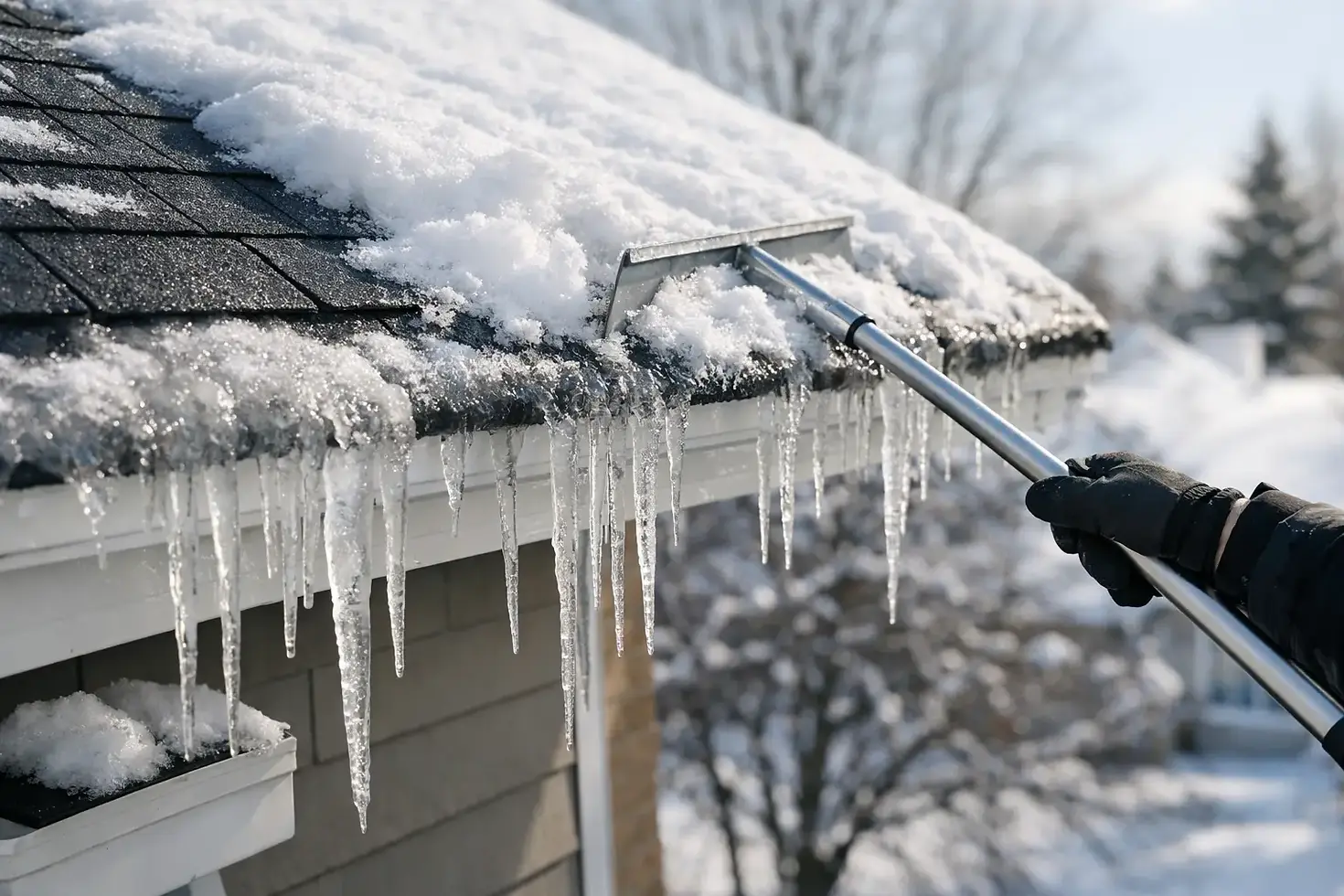
After heavy snowfall, a roof rake can reduce the amount of snow available to melt and refreeze. Work from the ground whenever possible, using a rake designed for roofs. Pull snow down gently from the lower portion of the roof rather than scraping shingles bare.
Do not climb onto an icy roof, chop at ice with an axe or shovel, or use open flame. These methods can damage shingles, gutters, flashings, and roofing membranes, while creating a serious fall or fire hazard. Salt products can also harm roofing materials, metal finishes, landscaping, and concrete below.
Steam removal is sometimes appropriate for a serious ice dam, especially when water is entering the home. This is professional work. Steam can remove ice without the mechanical damage caused by chiselling, but it addresses the immediate blockage rather than the attic conditions that caused it.
Know when an ice dam needs urgent attention
A visible ridge of ice is a warning sign, but indoor symptoms require faster action. Contact a roofing professional if you see water stains on ceilings, damp insulation, dripping around windows, bulging paint, or water running behind exterior walls. Take photographs and move valuables away from the affected area if it is safe to do so.
Do not assume the leak is coming directly from the spot where you see water indoors. Moisture can travel along rafters, roof decking, wiring, or framing before appearing on a ceiling below. A thorough inspection is the best way to identify whether the issue is an ice dam, damaged flashing, a roof leak, or a combination of problems.
Plan improvements before the next hard freeze
The best time to deal with recurring ice dams is before winter, or after the roof has safely thawed. An inspection can identify worn shingles, inadequate ventilation, blocked soffits, loose eavestroughs, and moisture damage that may not be obvious from the ground.
For an ageing roof, it can make sense to coordinate repairs or replacement with improvements to soffit, fascia, ventilation, and water management. Handling these parts together often produces a cleaner result than repairing one issue at a time. It also helps ensure roof-edge components are compatible and properly finished.
H2H Exteriors helps homeowners assess roofing, soffit, fascia, eavestrough, and drainage concerns with Manitoba weather in mind. A clear, honest estimate gives you a practical starting point, whether the answer is a targeted repair or a larger exterior upgrade.
A few frozen eaves after a storm may be normal. Repeated ice dams, interior moisture, or heavy ice buildup are not problems to wait out each year. Deal with the heat loss and drainage conditions behind them, and your roof has a far better chance of getting through winter dry and protected.


Comments