


How to Assess Storm Damage Around Your Home
A Manitoba storm can leave more behind than fallen branches. Wind can lift shingles without tearing them off, hail can bruise roofing where damage is hard to see from the ground, and backed-up eavestroughs can send water where it does not belong. Knowing how to assess storm damage helps you protect your home quickly without taking unnecessary risks.
The first rule is simple: do not climb on the roof or use a ladder during wet, icy, windy or unstable conditions. A safe ground-level check, followed by a professional inspection where needed, is the sensible way to find damage before a small opening becomes a leak, rot or interior repair.
Start with safety and obvious hazards
Wait until the storm has fully passed and conditions are safe enough to walk around the property. Keep clear of downed power lines, hanging branches, damaged utility equipment and loose pieces of metal or siding. If a tree has struck the home, water is entering rapidly, or part of the roof structure appears to be sagging, treat it as urgent damage rather than a routine inspection.
Before moving anything, take clear photographs and short videos from several angles. Record the date of the storm and note what happened: strong winds, large hail, heavy rain, ice, or falling limbs. This creates a useful record for your insurer and gives a contractor a clearer starting point.
Do not throw away broken shingles, pieces of siding, gutter sections or other material until you have documented them. If it is safe to do so, set loose pieces aside. They may help identify the product, colour and type of repair required.
How to assess storm damage from the ground
Walk the property slowly and look at the roofline, walls, eaves and surrounding ground. You are not trying to diagnose every problem yourself. You are looking for changes that were not there before and signs that water or wind has compromised the exterior.
On an asphalt shingle roof, look for missing tabs, lifted edges, shingles lying on the lawn, exposed dark underlayer, and an uneven roof surface. Wind damage is not always dramatic. A shingle may be creased, loosened or have lost its protective granules while still appearing mostly intact from below.
Hail damage can be even less obvious. Check for fresh dents on metal vents, flashing, eavestroughs, downpipes, window trim and garage doors. Those marks do not prove roofing damage, but they are a good reason to arrange an inspection. Hail strikes can weaken shingles and shorten their service life even when there is no immediate leak.
Check siding from several directions, especially on the sides of the house exposed to the storm. Vinyl may crack, split, come loose or show punctures. Premium cladding and trim can dent or pull away at joints. Look closely around windows, doors, corners and the lower wall areas, where wind-driven rain can enter behind damaged finishes.
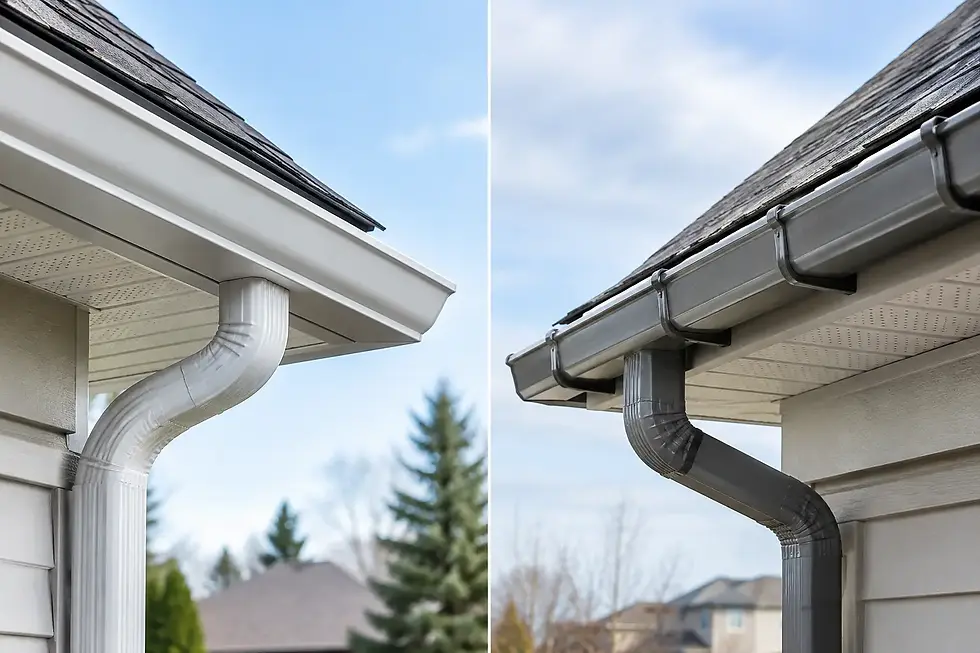
Your eavestrough system deserves the same attention. Look for sections that are bent, detached, overflowing, clogged with debris or pulling away from the fascia. A downpipe that has disconnected or become blocked can release a large amount of water beside the foundation. After a heavy Manitoba rainfall, that can quickly add to moisture problems in the basement or crawl space.
A practical ground-level check includes these areas:
Shingles, vents, flashing and roof edges visible from the ground
Siding, trim, soffit and fascia around the full perimeter
Eavestroughs, downpipes and outlet areas for overflow or separation
Windows, doors and exterior vents for damaged seals or displaced trim
The lawn, driveway and deck for roofing debris, branches and drainage changes
Check indoors for early signs of water entry
Exterior damage sometimes shows up inside before it is easy to see outdoors. Begin in the attic if it is safely accessible and has proper flooring. Use a torch and look for wet insulation, dark staining on roof decking, dripping, a musty smell or daylight showing through where it should not.
Then inspect ceilings and upper walls, particularly near chimneys, skylights, exterior walls and bathroom vents. Fresh water stains may look yellow or brown, but a new leak can also appear as bubbling paint, swollen plasterboard, damp trim or a faint line along a ceiling joint.
Do not assume a dry ceiling means the roof is fine. Water can travel along framing before it becomes visible, and small storm openings may only leak during rain driven from a particular direction. Equally, not every ceiling stain is caused by the latest storm. Older condensation, plumbing issues or previous leaks can look similar. A proper inspection helps separate new damage from an existing condition.
Pay attention to soffit, fascia and drainage
Homeowners often focus on shingles and overlook the finishing systems that protect the roof edge. Soffit provides ventilation under the eaves. Fascia supports the eavestroughs and gives the roofline a finished edge. When either is loose, bent or water-damaged, rain can reach vulnerable timber and insulation areas.
Look for sagging soffit panels, gaps at the eaves, peeling paint, soft fascia boards or eavestrough spikes pulling loose. Water marks beneath the gutter line can point to persistent overflow. Leaves, seed pods and roof granules may also block flow after a storm, particularly where trees overhang the house.
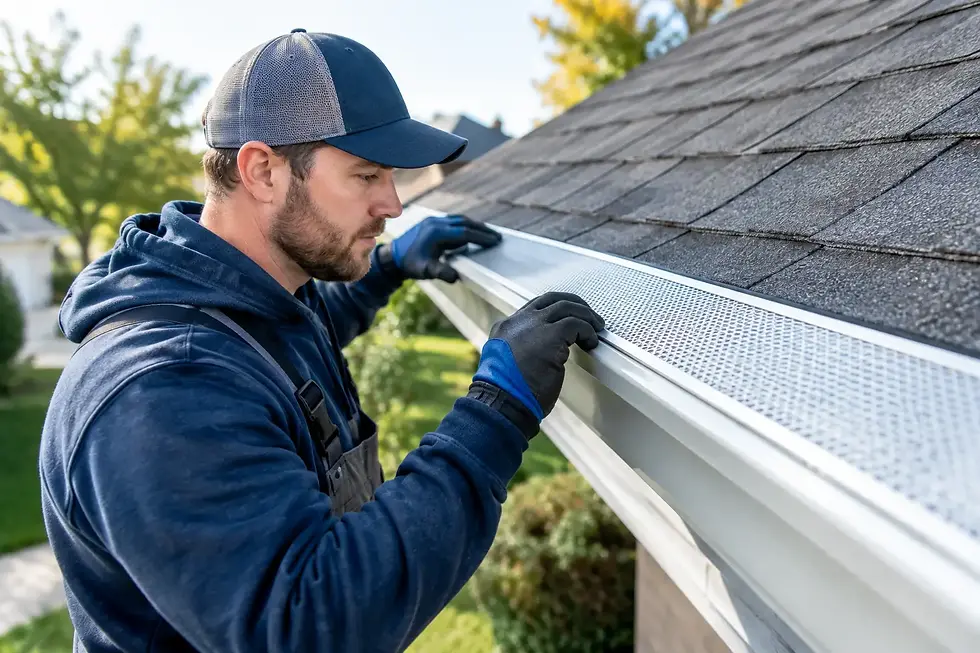
If water is spilling over the front or back of an eavestrough, avoid the temptation to clear it from a ladder in poor conditions. The immediate priority is to keep water away from the foundation where possible. Once conditions are safe, arrange cleaning, repair or replacement of damaged sections. Leaf Guard can reduce debris buildup, but it still needs to be installed correctly as part of a drainage system that slopes and discharges properly.
Know when a repair cannot wait
Some storm damage should be inspected promptly, even if the home seems dry. Call a qualified exterior contractor if you see missing shingles, loose flashing, damaged roof vents, cracked siding, detached eavestroughs, holes in soffit, or visible water entering the attic or living space.
Temporary protection may be appropriate when there is an active opening, but it depends on the conditions and the extent of the damage. Tarping a roof can prevent further water entry, yet a poorly secured tarp can cause more damage or create a safety hazard in high winds. This is not a job to rush from a ladder.
A professional can determine whether a targeted repair will provide lasting protection or whether the storm has exposed broader age-related wear. For example, replacing a few wind-damaged shingles may be sensible on a newer roof with matching materials available. On an older roof that is brittle, heavily granulated or nearing the end of its life, repeated patches may not be the best value.
Document damage carefully for insurance
If you may make an insurance claim, document the condition before repairs begin where it is safe to do so. Take wide photographs that show the whole elevation of the house, then close-ups of individual damage. Photograph debris on the ground, dents to metal components, water stains indoors and any temporary measures taken to prevent further loss.
Keep a simple written timeline with the storm date, when you noticed damage, any contact with your insurer, and all repair-related invoices. Your insurer will decide what the policy covers, so review your policy and follow its claim process. A contractor can provide an assessment and scope of required work, but should not promise an insurance outcome.
Be cautious with unsolicited offers immediately after severe weather. A reliable contractor will explain what they found, show you the affected areas where possible, provide a clear estimate and give you time to make an informed decision. Pressure to sign immediately, pay a large amount upfront or accept vague repair descriptions is a warning sign.
Get an experienced local inspection
Storm damage is rarely limited to one visible issue. Wind can affect shingles and fascia at the same roof edge. Hail may mark the roof, siding and eavestroughs. Overflowing gutters can be caused by debris, poor slope, storm damage or a combination of all three. Looking at the exterior as one protection system leads to better repairs.
For homeowners in Winnipeg and surrounding Manitoba communities, H2H Exteriors provides practical inspections and free estimates for roofing, siding, soffit, fascia and eavestrough concerns. With more than 20 years of local experience, the focus is on identifying what needs attention now, what can be monitored, and what will give your home dependable protection through the next season.
After you have documented the damage, do not wait for a minor issue to announce itself through a ceiling stain or wet wall. A careful inspection and an honest repair plan can turn a stressful storm cleanup into a manageable next step.

Comments