


Seamless vs Sectional Gutters for Winnipeg Homes
A gutter system can look like a small part of your home, until water starts spilling over the edge during a hard Winnipeg downpour or freezing into heavy ice along the roofline. When comparing seamless vs sectional gutters, the real question is not which option costs less on installation day. It is which system will manage water reliably through snowmelt, summer storms, falling leaves and long Manitoba winters.
For most homes, gutters are a long-term defence against wet basements, damaged soffit and fascia, foundation movement, and stained siding. The right choice depends on your roofline, budget, drainage needs and the condition of the existing exterior finishing.
What is the difference between seamless and sectional gutters?
Sectional gutters are supplied in standard lengths, then joined together on site with connectors and sealant. The installer cuts the pieces to suit the roofline and adds end caps, corners and downpipes. They are widely available and can be installed in smaller sections.
Seamless gutters are formed on site from a continuous coil of metal. Each straight run is made to the exact length of the home, so there are no joints along that run. Joints are still needed at corners, end caps and downpipes, but there are far fewer of them overall.
Both systems can direct water away from the house when properly sized and installed. The difference is in how many potential weak points the system has over time.
Seamless vs sectional gutters: leak resistance
Every gutter joint relies on sealant. Sealant can dry out, shrink, crack or pull away after years of temperature changes. That matters in Winnipeg, where a gutter may experience melting snow, refreezing water and extreme cold in the same season.
Because sectional gutters have a joint wherever two lengths meet, they provide more places for leaks to develop. A small leak may not seem urgent, but repeated water exposure can damage fascia boards, stain siding and allow moisture behind exterior finishes.
Seamless gutters reduce the number of joints on long roof edges. Fewer joints generally mean fewer locations that need resealing or attention. This does not make them maintenance-free. Corners, outlets and end caps should still be inspected, particularly after severe weather. But for homeowners who want to reduce routine leak concerns, a continuous-run system is usually the stronger option.
Installation quality matters as much as gutter type
A well-fitted sectional system will outperform a poorly installed continuous-run system. Gutters need the correct slope so water moves towards the downpipe without sitting in the trough. Hangers must be spaced and secured properly to support snow, ice and water weight. Downpipes need to carry water far enough away from the foundation.
The installer should also assess the fascia before fitting new gutters. If wood is soft, rotted or pulling away, new eavestroughs cannot be fixed securely until that issue is addressed. This is one reason it helps to work with an exterior contractor who understands roofing, soffit, fascia, siding and water management as one connected system.
Correct sizing is equally important. A large, steep roof can shed a surprising volume of water in a summer storm. If the trough or downpipes are too small, overflow can happen even with brand-new gutters.
Cost: lower upfront price or lower maintenance risk?
Sectional gutters commonly have a lower initial cost because the materials are sold in pre-cut lengths and can be fitted without specialist forming equipment. For a small repair, outbuilding or straightforward temporary solution, that price difference can make sense.
However, the upfront saving should be weighed against future maintenance. More joints can mean more resealing, more opportunities for debris to catch, and a greater chance of leak repairs over the life of the system. Individual damaged sections can be replaced, which is an advantage, but colour matching older materials may be difficult.
Seamless gutters normally cost more to install because they are custom formed for the property and require professional equipment. In return, homeowners receive a cleaner fit and fewer joint-related maintenance concerns. On a long-term family home, that often provides better value than selecting the lowest installation price.
The best option is not automatically the most expensive one. It is the system that suits the home, is installed properly, and has a realistic plan for maintenance.
Appearance and curb appeal
Custom-formed gutters generally give a neater appearance because each long run is made to fit the roofline. There are fewer visible connectors interrupting the line of the eavestrough. This is particularly noticeable on homes with long front elevations, updated siding or newly painted trim.
Sectional gutters can still look tidy when installed carefully, especially on shorter runs. Their visible joins are simply more noticeable up close. If curb appeal is a priority during a wider roofing, siding or fascia upgrade, continuous gutters often provide the more finished look.
Colour selection matters as well. Gutters should complement the fascia, soffit, siding and roof rather than look like an afterthought. Choosing a durable finish and coordinating the full exterior system gives the home a more consistent result.
How Manitoba weather affects the decision
Snow and ice do not automatically mean one gutter material or style will solve every problem. Ice dams begin at the roof level, often because heat escaping from the home melts snow unevenly. Gutters can then become part of the freeze-thaw cycle, especially when drainage is blocked or the roof edge remains cold.
That said, a system with fewer joints is less vulnerable to water working through joint sealant during repeated freezing and thawing. Strong hangers, sound fascia and clear downpipes also matter. A gutter full of frozen debris can pull away from the house regardless of whether it is sectional or continuous.
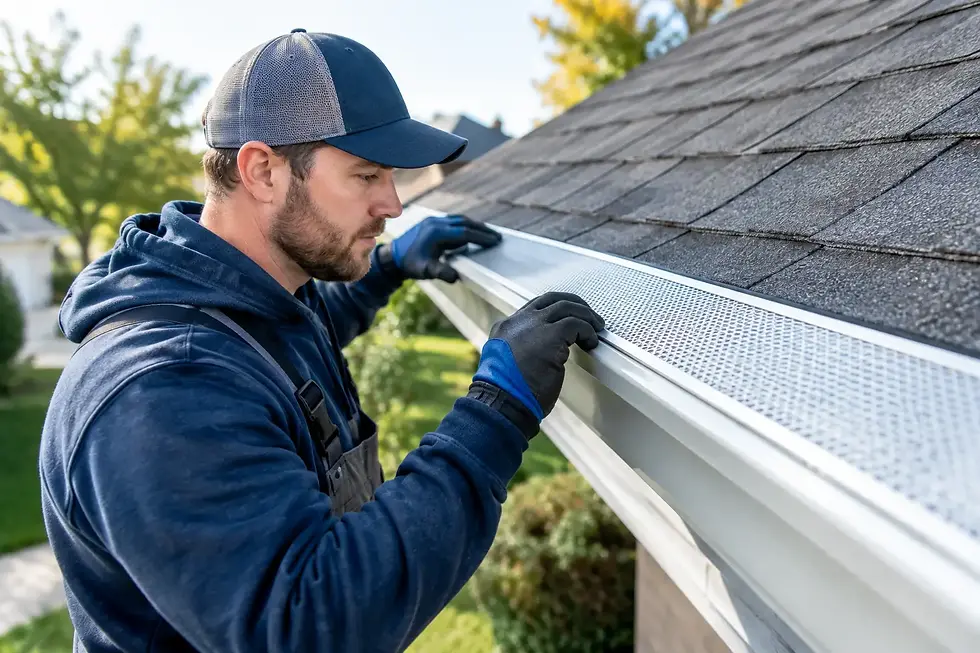
In autumn, leaves, needles and seed pods can block outlets and downpipes. Leaf Guard protection can reduce the amount of debris entering the trough, helping water flow freely while cutting down on ladder work. It is particularly worthwhile for homes beneath mature trees or cottages that are not checked every week.
When sectional gutters may be the right choice
Sectional gutters are not a poor product by default. They can be sensible where the budget is tight, the run is short, or only a small portion of the system requires replacement. They may also suit garages, sheds and other secondary structures where a custom-formed system is not necessary.
They can also be practical when an existing matching system needs a limited repair. Replacing one damaged length may be more economical than changing every gutter around the property.
The key is to be realistic about the condition of the rest of the system. If joints are leaking in several places, gutters are sagging, fascia is deteriorating or water is regularly reaching the foundation, repeated patch repairs may cost more than a properly planned replacement.
When seamless gutters are the better investment
For most full-home gutter replacements, seamless gutters are the preferred choice. They are especially well suited to long rooflines, homes with recurring joint leaks, properties surrounded by trees, and exterior renovation projects where appearance and durability both matter.
They are also a strong fit for homeowners planning to stay in the property. Fewer joints simplify a common maintenance issue and help protect the fascia and foundation from persistent water exposure. Combined with correctly placed downpipes and debris protection, they create a more dependable water-management system.
Before work begins, ask for a clear assessment of the roofline, gutter size, downpipe placement, fascia condition and drainage route. Honest recommendations should account for your home rather than treating every property the same.
A new eavestrough system should do more than make the roof edge look finished. It should move water away from the home quietly and reliably, season after season. For Winnipeg homeowners, investing in proper design and experienced installation is often the decision that prevents the costly problems no one wants to find after the next storm.


Comments