


Best Eavestrough Materials for Manitoba Homes
A Winnipeg eavestrough has a difficult job. It must carry heavy rain away from the foundation, hold its shape under snow and ice, and keep working through sharp temperature changes. The best eavestrough materials are not simply the ones with the highest price tag. They are the materials that suit your roofline, drainage needs, budget, and the weather your home faces year after year.
For most homes in Manitoba, seamless aluminium is the practical front-runner. That does not make it the automatic answer for every property. Steel, copper, vinyl, and zinc each have a place, but their limitations matter just as much as their benefits. Choosing well starts with understanding how the material performs once winter arrives and the eavestrough is carrying real water, ice, and debris.
What an Eavestrough Material Needs to Handle
An eavestrough system is more than a channel attached to the edge of a roof. It directs water into downpipes and safely away from the foundation, siding, walkways, and landscaping. When it is undersized, poorly sloped, corroded, or pulling away from the fascia, water can spill where it should not.
Winnipeg homeowners should think beyond ordinary rainfall. Spring thaw can send a large volume of meltwater off a roof in a short period. Summer storms can overwhelm narrow or clogged troughs. Winter snow loads, ice buildup, and freeze-thaw cycles place added stress on seams, hangers, and fascia boards.
The right material should resist corrosion, stay securely fastened, and be available in a profile large enough for the roof area. Installation quality is equally important. Even premium metal can fail to drain properly if it has insufficient slope, weak hangers, or downpipes placed in the wrong locations.
Best Eavestrough Materials: A Practical Comparison
Seamless aluminium: the best fit for most homes
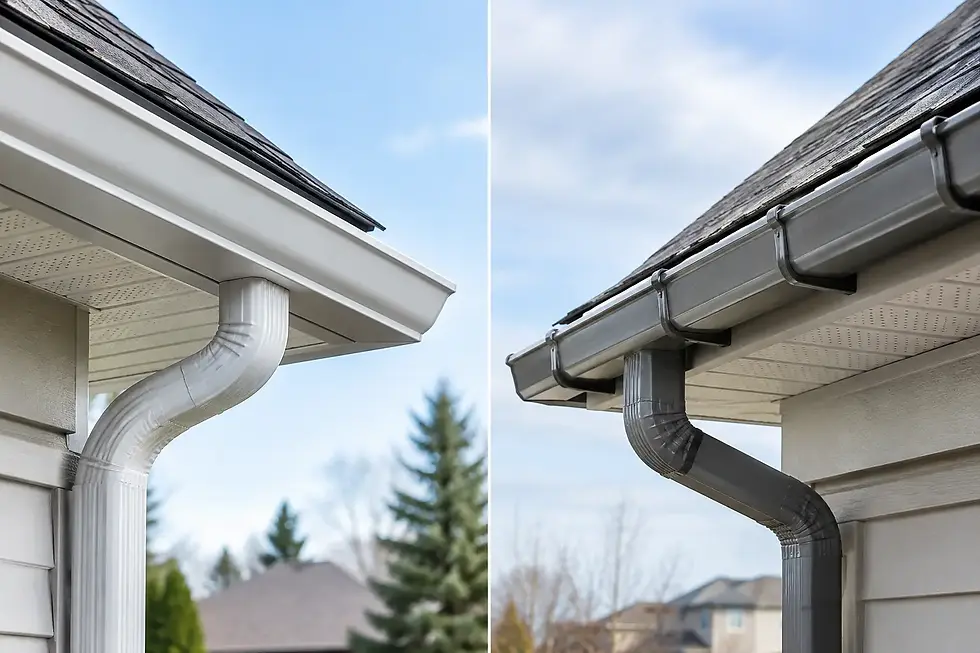
Aluminium is the most common residential eavestrough material for good reason. It is lightweight, rust-resistant, affordable compared with premium metals, and available in a wide selection of factory-finished colours. For homes with vinyl, fibre cement, or engineered-wood siding, it is usually straightforward to match or complement the existing exterior.
Seamless aluminium eavestroughs are formed on site to the length of each roof edge. Fewer joints mean fewer common leak points, which is a meaningful advantage in a climate where trapped water can freeze and expand. Corners and outlet connections still require seams, but the long straight runs are continuous.
Aluminium can dent if a ladder is placed carelessly against it or if falling branches strike it. It may also bend under severe ice buildup if the system is poorly supported. Properly installed heavy-gauge seamless aluminium, with strong hidden hangers and sensible downpipe placement, gives most homeowners an excellent balance of cost, appearance, and long-term performance.
Galvanised steel: strong, but more demanding
Steel eavestroughs offer greater impact resistance than aluminium. They can be a sensible choice where durability against physical damage is the main concern, particularly on properties with mature trees or areas exposed to windblown debris.
The trade-off is corrosion. Galvanised coatings and painted finishes provide protection, but scratches, worn edges, and standing water can eventually expose steel to rust. Manitoba winters can speed up the consequences when moisture remains in seams or behind debris. Steel is also heavier, so secure fastening and a sound fascia board are essential.
Steel can work well when the product quality is high and maintenance is consistent. For many homeowners, however, aluminium provides comparable real-world value with less concern about rust over time.
Copper: distinctive and exceptionally long-lasting
Copper is a premium option with a look that cannot be copied by painted metal. It begins with a warm metallic finish and gradually develops a natural patina. On heritage homes, high-end custom builds, and properties with copper roof details, it can be an outstanding architectural choice.
It is also durable and naturally corrosion-resistant. Copper systems can last for decades when installed correctly, but they require a much larger upfront investment than aluminium or steel. The installation needs specialist attention as well, particularly where copper meets other metals. Incompatible materials can create corrosion issues, so every component must be selected carefully.
Copper is worth considering when appearance and long service life are priorities and the budget supports it. It is not necessary to get reliable drainage on a typical family home.
Vinyl: low initial cost, limited cold-weather confidence
Vinyl eavestroughs are light, inexpensive, and do not rust. They are often sold in sections, making them seem like a simple replacement option. Their weakness is how they respond to extreme temperatures and long-term exposure.
In severe cold, vinyl can become more brittle. Sections can crack, sag, or separate at joints as temperatures shift. Because sectional systems have more connection points than seamless metal systems, there are also more places for leaks to develop. Colour fading and warping may become visible over time.
For a small shed or a mild-climate property, vinyl may be adequate. For a primary residence in Winnipeg or nearby Manitoba communities, it is generally not the material we would choose for dependable, long-term water management.
Zinc: a specialist premium option
Zinc is durable, naturally weather-resistant, and capable of lasting for many years. Like copper, it develops a protective surface patina and has a refined appearance that suits certain architectural styles. It is more commonly used on custom projects than standard residential replacements.
Its cost and specialist installation requirements put it outside the practical range for many homes. Zinc also needs careful design to allow for natural movement as temperatures change. It can be an excellent material, but it is a specific solution rather than a default recommendation.
Material Is Only One Part of the Decision
Homeowners often focus on the trough itself and overlook the capacity of the whole system. A wider eavestrough may be needed on a large or steep roof, especially where several roof slopes drain to one area. Standard five-inch troughs suit many homes, while six-inch systems provide more carrying capacity for larger roof sections and heavy runoff.
Downpipes deserve the same attention. A trough cannot perform properly if water reaches an undersized downpipe and backs up. The number, size, and placement of downpipes should be planned around the roof layout, not added as an afterthought. Extensions or underground drainage may also be needed to discharge water well away from the foundation.
Fascia condition is another deciding factor. If the boards behind an old eavestrough are soft, stained, or rotted, replacing the trough without addressing the damaged material can lead to loose fasteners and repeat repairs. Soffit ventilation, roof edge details, and attic insulation can also affect ice formation along the eaves.
Choosing a Colour and Finish That Lasts
Painted aluminium eavestroughs provide plenty of flexibility. You can coordinate them with fascia, soffit, siding, window trim, or roofing for a finished appearance. A contrasting colour can also define the roofline, though darker colours may show dust, pollen, and streaking more readily in some settings.
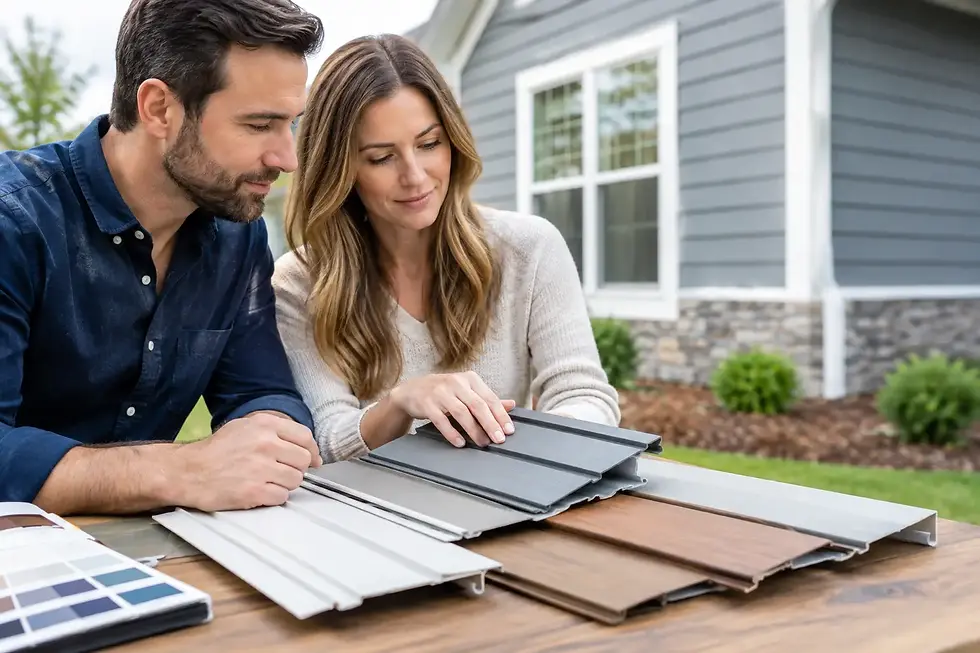
The quality of the factory finish matters more than chasing a particular shade. A durable finish resists peeling and chalking, helping the system continue to look cared for after several seasons. If you are replacing siding and eavestroughs together, viewing samples side by side in daylight is the sensible way to make a final choice.
Do Leaf Guards Change Which Material You Need?
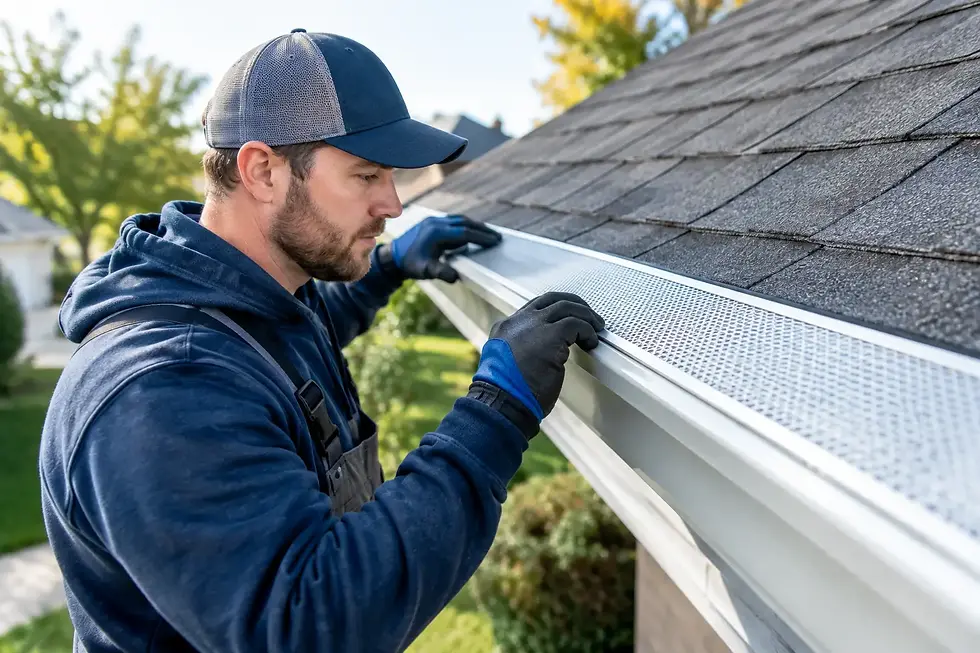
Leaf guards reduce the amount of leaves, needles, and debris entering the eavestrough. They can lower cleaning needs and help water keep moving during rain, but they do not fix poor slope, inadequate downpipe capacity, or a damaged trough.
A quality guard system can be fitted to aluminium, steel, copper, or zinc systems. For homes beneath mature trees, it is often a worthwhile addition to a new eavestrough installation. The system should still be inspected periodically, particularly after major storms, because debris can collect on top of guards and outlets can become obstructed.
When Replacement Makes More Sense Than Another Repair
A leaking seam or loose bracket can often be repaired. Repeated leaks in several locations, widespread rust, sagging runs, cracking vinyl, or water marks behind the eavestrough usually point to a system near the end of its useful life. Water pooling near the foundation or spilling over during ordinary rain is another sign that the current layout may not have enough capacity.
Replacing an ageing system is an opportunity to correct the original problems: improve the slope, increase trough size where required, add downpipes, repair fascia, and install guards if debris is a recurring issue. That approach costs more than a quick patch, but it helps prevent moisture damage that can become far more expensive.
For most Manitoba homes, heavy-gauge seamless aluminium remains the sensible choice: durable, clean-looking, corrosion-resistant, and cost-effective. A local exterior professional can assess your roofline and drainage requirements before recommending a system, so the water goes where it belongs - away from your home. H2H Exteriors can provide a free estimate and practical advice for a replacement or upgrade built for local weather.
Comments