


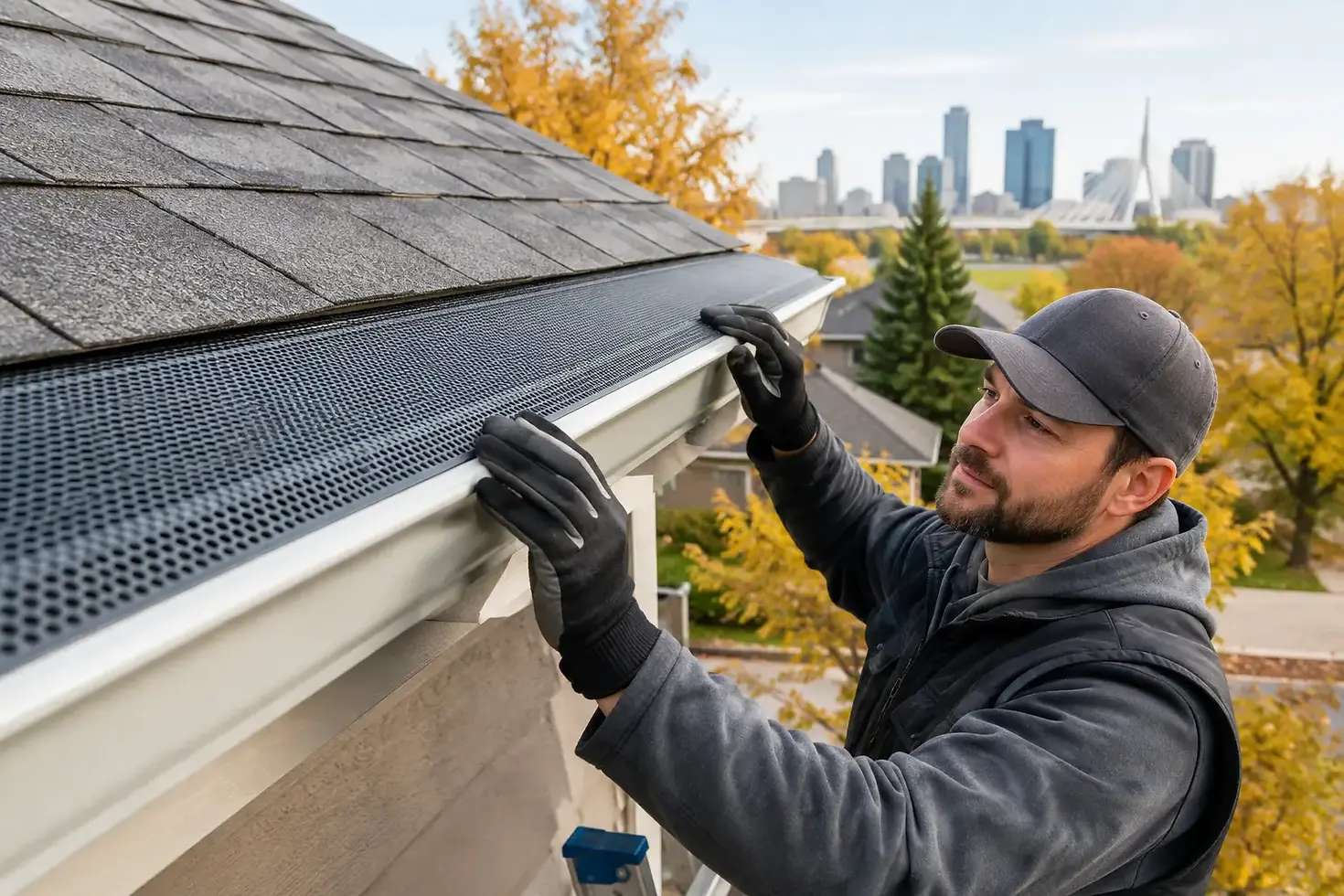
When to Install Leaf Guards on Winnipeg Homes
A blocked eavestrough rarely looks urgent until water is spilling over the edge during a hard rain. By then, it can soak fascia boards, run down siding, pool near the foundation and leave homeowners with a much larger repair than expected. Choosing to install leaf guards is a practical way to keep debris moving out of the drainage system while reducing the need to climb a ladder several times a year.
For Winnipeg homes, cottages and rural properties, the decision is not simply about leaves. Manitoba weather brings spring thaw, wind-blown seed pods, summer storms, pine needles and heavy autumn debris. A properly selected and professionally fitted guard can help eavestroughs do the job they were designed to do: move water safely away from the roofline and foundation.
Should You Install Leaf Guards?
Leaf guards are covers or screens fitted over an eavestrough. They let rainwater enter while stopping most leaves, twigs and other larger debris from collecting inside. The aim is straightforward: fewer blockages, less standing water and fewer routine clean-outs.
They can be a worthwhile upgrade for many homes, particularly where mature trees overhang the roof or wind carries debris onto the property. Homes with a steep roofline, a second storey, or difficult access also benefit because regular eavestrough cleaning becomes more time-consuming and less safe for the homeowner.
Leaf guards are not a substitute for sound eavestroughs. If the troughs are sagging, poorly pitched, leaking at joints or pulling away from the fascia, those issues need attention first. Covering a failing drainage system does not fix it. It can make problems harder to spot until water damage has already developed.
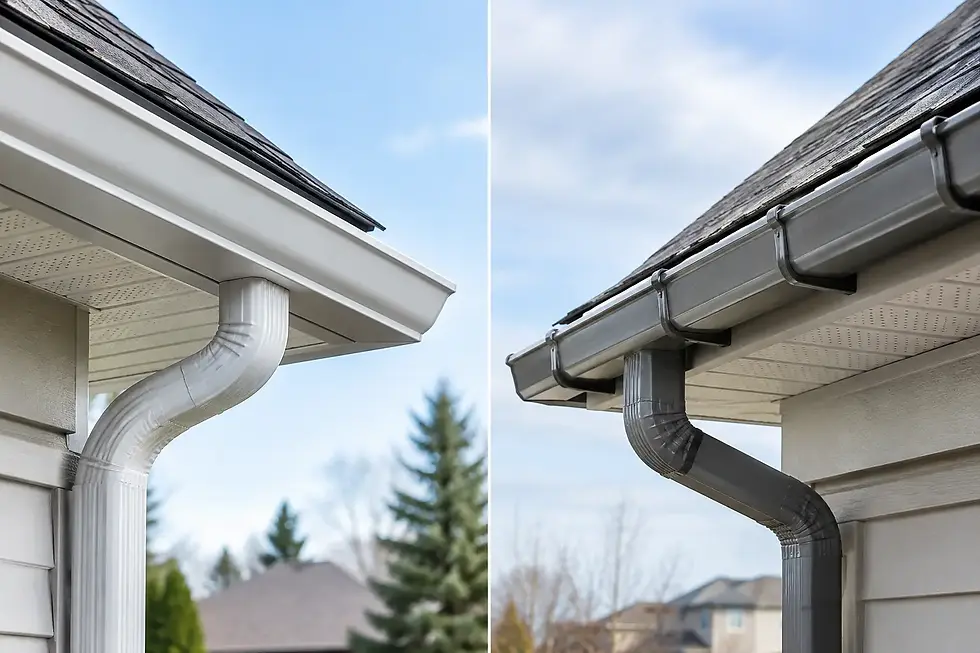
The same applies to undersized or poorly placed downpipes. Guards help prevent debris blockages, but water still needs sufficient capacity and a clear route to drain away from the house.
Signs Your Home Would Benefit From Leaf Guards
The most obvious sign is repeated clogging. If you are cleaning out your eavestroughs every spring and autumn, or more often after windstorms, guards can reduce that ongoing work. Water cascading over the front edge of the trough during rainfall is another warning sign. It may point to a blockage, but it can also mean the system needs adjustment or repair.
Look closely at the area below the roofline as well. Peeling paint on fascia, staining on siding, damp patches near the foundation and soil washed away around flower beds can all be linked to uncontrolled roof runoff. These problems are not always caused by clogged troughs, but they are worth investigating before moisture reaches more vulnerable parts of the home.
Properties near poplars, elms, maples and spruce trees often see the biggest day-to-day benefit. Broad leaves can quickly form a mat in an open eavestrough, while pine needles and small seeds can settle into corners and around downpipe outlets. The best guard for one property may not be right for another, which is why the surrounding trees and the roof configuration matter.
What Leaf Guards Can and Cannot Do
A quality leaf guard reduces the amount of debris entering the eavestrough. That means cleaner channels, better water flow and less need for ladder work. It can also help protect fascia and soffit by preventing the prolonged overflow that often occurs when an eavestrough is packed with wet leaves.
However, no guard makes a drainage system completely maintenance-free. Fine grit from asphalt shingles, small seeds, roof moss and wind-blown dust can still collect over time. Debris may also rest on top of some guard designs, especially beneath dense trees. Periodic inspection remains sensible, particularly after major storms and during spring thaw.
In Manitoba, winter adds another consideration. Leaf guards are not an ice-dam solution. Ice dams are usually related to heat loss from the home, roof insulation, ventilation and freezing conditions. A guard can help keep the eavestrough clearer before winter arrives, but it cannot correct a roof or attic issue that causes meltwater to refreeze at the eaves.
This is why homeowners should be cautious about one-size-fits-all promises. The right product and installation method depend on the roof, existing eavestrough condition, tree coverage and how the property handles water now.
How Professionals Install Leaf Guards
A proper installation begins with the eavestroughs themselves. Before any guards are fitted, the installer should check for loose brackets, poor slope, separated seams, damaged end caps and blocked downpipes. The troughs need to be cleaned thoroughly so old debris is not trapped underneath the new covers.
Next, the installer assesses the roof edge and fascia. Guards should fit securely without interfering with the roof covering or creating a path for water to travel behind the eavestrough. The system must be positioned to catch water running from the roof, including the heavier flow that can occur during a Winnipeg summer downpour.
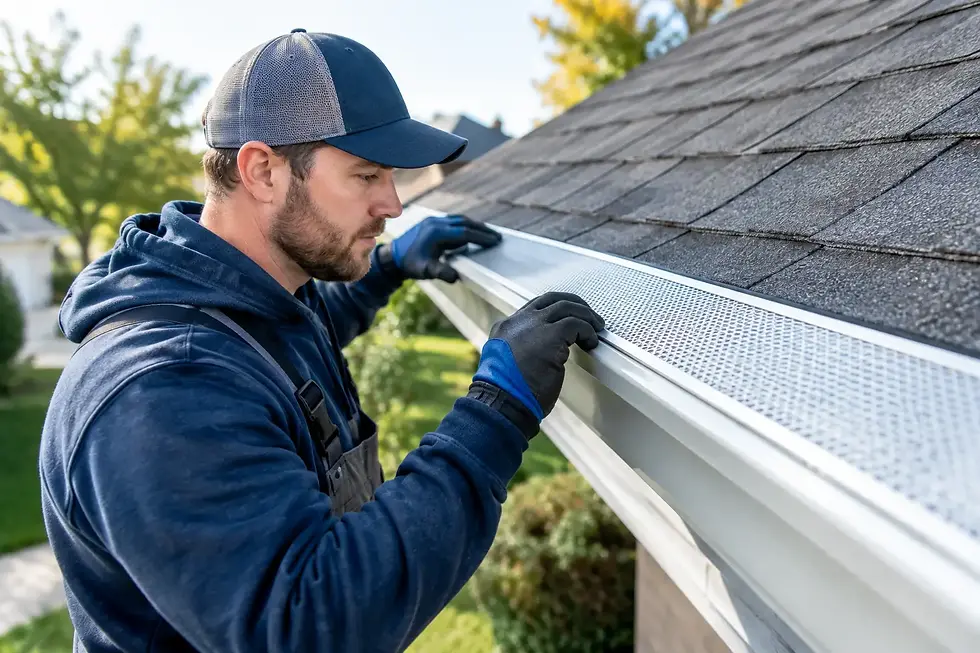
The guards are then cut and secured to suit the length and shape of each run. Corners, valleys and areas beneath roof projections need particular attention because they often collect the most water and debris. A rushed installation can leave gaps where leaves enter or create sections that sit unevenly and restrict flow.
Once fitted, the system should be checked for secure fastening and clear water movement towards the downpipes. A professional approach considers the full water-management system, not just the top of the trough. That includes confirming downpipes discharge away from the foundation and do not create pooling near walkways or landscaped areas.
Choosing the Right Guard for Your Roofline
Several guard styles are available, from basic screens to fine mesh and solid-surface covers. The right choice is usually driven by the type of debris around the home and the design of the existing eavestroughs.
Coarser screens may keep out larger leaves and twigs, but smaller needles and seeds can still pass through. Fine mesh systems provide more protection from smaller debris, although they need to be installed carefully so water enters reliably and the mesh is supported properly. Surface-tension designs can work well in the right conditions, but their performance depends heavily on roof pitch, water volume and precise fitting.
Cost also matters. A lower-priced guard may suit a lightly treed, single-storey home with easy access. A property surrounded by mature trees, or one with a complex and high roofline, may justify a more durable system and professional fitting. The cheapest option is not always the best value if it needs frequent adjustment or allows debris to build up where you cannot easily see it.
Ask for a clear assessment of the current eavestrough condition before committing to guards. If replacement is already approaching, it often makes more sense to install new eavestroughs and guards as one coordinated project. This avoids paying for work twice and helps ensure compatible materials, correct slope and a clean finished appearance.
Protecting Your Home Between Inspections
Even after leaf guards are installed, take a quick look at the roofline after severe weather. Watch for water overflowing, sections of eavestrough pulling away, debris collecting at roof valleys and downpipes that discharge too close to the house. These checks take only a few minutes from ground level and can reveal an issue before it becomes a repair project.
Avoid leaning ladders directly against eavestroughs, as this can bend the metal or loosen brackets. If cleaning or inspection requires roof access, height work or removing guard sections, it is safer to call an experienced exterior contractor. A damaged eavestrough can direct water behind fascia or onto siding, where the problem is not always visible straight away.
For homeowners in Winnipeg and nearby communities, H2H Exteriors can assess existing eavestroughs, repairs and leaf guard options as part of a practical exterior protection plan. A free estimate should give you a clear picture of what needs attention now, what can wait and which solution suits your property.
The right leaf guard system should make wet weather less of a worry, not create another item on the maintenance list. Start with a sound, well-pitched eavestrough system, choose guards suited to the debris around your home, and address water flow before the next heavy rain tests the roofline.

Comments